Fairfax Grange Chronicles · 1946
A Year of Progress and Pesky Problems
Previously, in Part 8
1945 saw the Fairfax Grange juggling dances, dinners, and wartime challenges with their usual grit and ingenuity. The Home Economics Committee became the backbone of the Grange. They raised money and kept everyone fed. This remained true even when the basement kitchen felt like a sauna. By year’s end, they celebrated peace with quiet optimism for what lay ahead. (Read more: Part Eight: Keeping the Home Fires Burning )
The Fairfax Grange: Part Nine – A Year of Progress and Pesky Problems
By 1946 , the war was over, but challenges weren’t. The Fairfax Grange rolled up its sleeves and got to work. The Home Economics Committee kicked off the year with a bang, raising $400 by February. These women were a force of nature. They served up dinners. They ran dances that kept the hall in fine shape and everyone’s bellies full.
Elections brought Brother Jackson in as the new Master. One of his first tasks? Addressing the “small problem” of kids causing chaos during meetings. They hired a girl for 50 cents an hour to corral the children downstairs. Problem solved—for the price of two dinners and a slice of pie. They installed fans in the dining area. This proved once again that the Grange solved just about anything, one small step at a time.
In March, the Grange turned its attention to farming woes. A milk shortage hit hard. Dairy cows were struggling because of feed shortages. The government blamed this on last fall’s overfeeding. They also cited grain shipments to Europe as a reason. The Grange urged farmers to cull under-performing cows, but spirits were low. Meanwhile, Brock’s Department Store wrote to inform the ladies that hose —yes, stockings—were in short supply. It seemed even the smallest luxuries were scarce.
Spring brought improvements to the hall. By April, the members approved 100 new chairs for $2.98 each and ordered stage curtains for the hefty sum of $806.68 . (Interesting to note this sum was larger than they had paid for the acre lot to build the grange hall.) There was a motion to raise dues to $3, but it was voted down. A committee debated adding a water fountain , while news spread that the Arvin Richardson Water Co. would run a main down Fairfax Road. Change was coming, one pipe at a time.
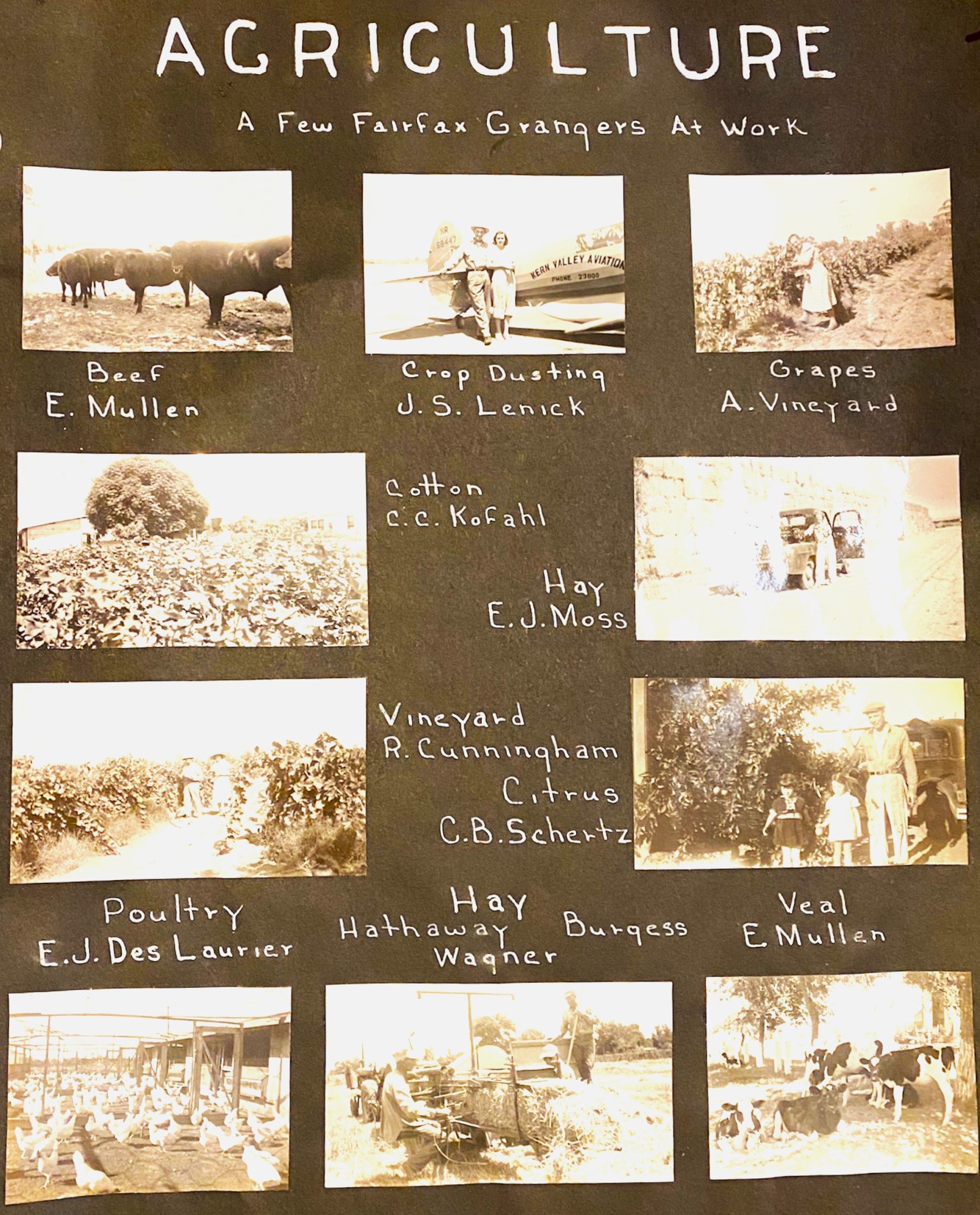
Summer arrived with moments of levity. Brother Wattenbarger hosted a picnic at his ranch, supplying beef for the occasion. But dairy farmers faced more headaches. A railroad strike delayed feed shipments, and the shortage of baling wire didn’t help. In a small victory, the Panama Grange donated a water fountain , sparing Fairfax the cost of buying one.
July brought searing heat, so the Grange held a meeting at Jefferson Park. Butterfat prices climbed to $1.28 , freight rates jumped 9% , and tempers rose with the mercury.
Autumn focused on harvests and hospitality. The citrus crop looked good, but fertilizer was still scarce. The price of good dairy cows was up to $300. The hall hosted a Kiwanis dinner for 150 guests, showing off its newly installed, fireproof stage curtains .
As winter settled in, the Grange kept its eye on the future. They donated $200 to the State Grange building fund. They also prepared to host all nine Kern County Granges for a January officer installation. But December also brought sadness. Brother Chas. Jobe , a cornerstone of the Grange, passed away on December 5th.
What’s Next?
In 1947, the Fairfax Grange would build on its momentum, tackling new challenges and dreaming bigger. What surprises and stories await? Stay tuned for Part Ten.