Fairfax Grange Chronicles · 1939
Building Dreams: The Fairfax Grange Story
The Fairfax Grange: Part Two – Building Dreams, One Nail at a Time
“The strength of the team is each individual member. The strength of each member is the team.” — Phil Jackson
Previously, in Part One: The Fairfax Grange began humbly. Members met at Fairfax School. They supported one another through the challenges of the Great Depression. Their dreams of a hall of their own took root in 1935. They finally secured land at the corner of Brundage and Fairfax Roads in 1939. It had taken years of fundraising, community events, and sheer perseverance to reach that point. (Read the full story here: How in the H-E-Double-Hockey-Sticks Did Our Grange Get Built? )
(Do you know somebody who would love to get this email? They can sign up by following this link .)
The summer of 1939 ended, and autumn’s golden light appeared. The Fairfax Grange stood on the brink of something extraordinary. The land was theirs. But, any wonderful fairy tale teaches that building the castle requires a bit more magic. It also requires a lot more hard work.
By August , the Grange had formed a building committee. Brother Wattenbarger (Members called each other Brother or Sister) started the quest for contractors. Bids were elusive, but Wattenbarger gave a simple directive: “If you can get one for $4,000, take it.”
While they waited for numbers to materialize, life at the Grange went on. Members debated water projects at the Padre Hotel . The Home Economics Committee kept spirits (and funds) high. They sewed quilts and flipped pancakes. These were not idle dreamers; they were doers, every one of them.
The new year of 1940 brought fresh plans and new challenges. In February, the lumber discussions began, and bids rolled in: one for $2,371.70, another for $2,688.53, and a bargain price for digging the basement: $75. They estimated that labor costs would account for 40% of the materials. This estimation brought the dream tantalizingly close to that $4,000 mark. Volunteers agreed to work for 40 cents an hour, their wages to be donated back to the building fund. By March , the floor plans were completed, and J.C. Wattenbarger submitted the lowest bid at $2,219.21.
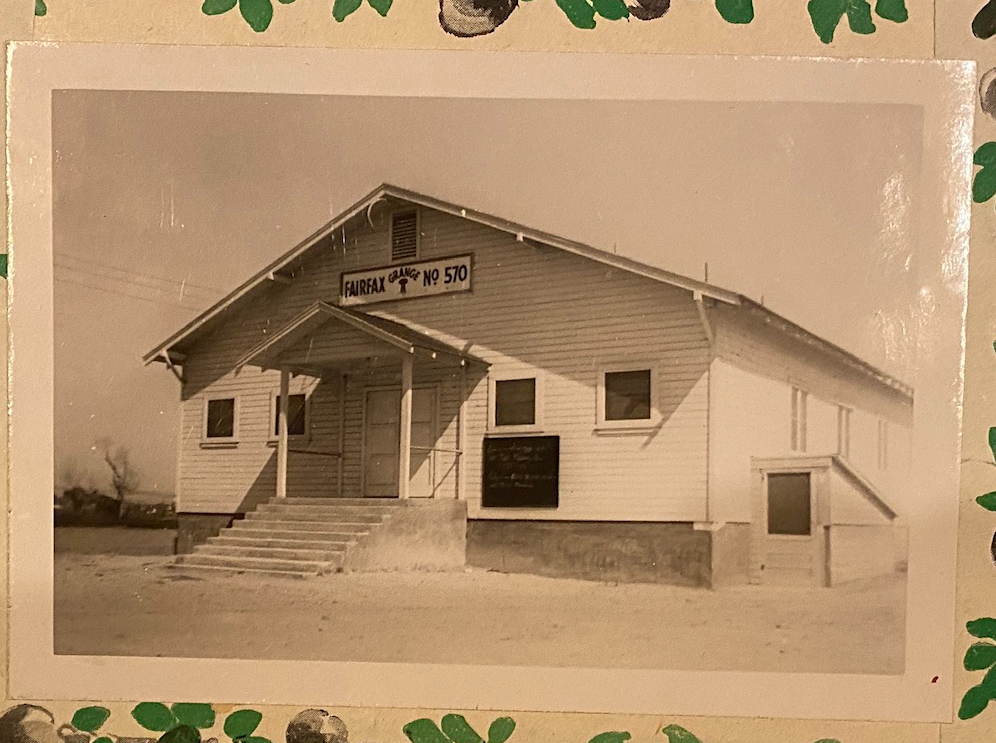
Then came the pivotal moment in May : Sister McCullough offered to loan the Grange $3,500. Her heart was as big as her checkbook. The loan came at 6% interest. The details were sketchy, but the terms were clear—until Sister McCullough showed her negotiation prowess. By June, she agreed to lower the interest to 3% but only if construction began immediately. The catch? She was leaving for the summer, and her departure lit a fire under the membership. They quickly rallied to clear the land and prepare for the basement.
By mid-June, bids to dig the basement ranged from $55 to $56.50—prices so close it seemed almost poetic. Workmen offered their labor for $9 a day, with one generous soul donating $2.50 of that back to the Grange. Another charged $8 a day, donating back 50 cents. By June 28, the basement was dug, and the foundation of their dream was ready for concrete.
From there, things moved fast. By July 12 , the floor was ready to be laid , and volunteers were called in. Two weeks later, the main hall floor was done, and they began work on the stage. By mid-August, 14 men climbed onto the roof. They worked diligently under the summer sun. They were fueled by a potluck dinner prepared by the women. Knotty pine walls went up, and the hall felt like home.
On August 23, 1940 , the Grange held its first meeting in the new hall. There were no lights yet, but they had arrived. The following Sunday, the community gathered to paint the hall. The women provided a chicken dinner to keep the workers going. At the Fairfax Grange, the women made sure everyone stayed fueled as they measured progress in meals.
By September 27 , excitement was building for the Grand Opening. The Kofahl’s donated a piano, which they would deliver once they lock the doors. Yes, locks were apparently an afterthought in 1940. They booked the Monier Orchestra for dinner dances on the 1st and 3rd Saturdays of the month. They set October 30 for the grand event. The V.F.W. agreed to supply a barbecue for 300 people at a cost of $152.25.
Preparations continued into early October. Sister Jobe ordered dishes from Sears Roebuck , paying $8 down and $8 a month. Bakersfield Hardware donated cooking utensils, and KERN Radio offered free advertising. The Bakersfield Californian once again lent its support, courtesy of Mr. Harrell, by publicizing the event in the local paper. They sanded the maple floor, sold tickets for a $1 each, and excitement filled the air.
On October 30 , the barbecue and dance were a resounding success, netting $350.71.
The Grange was finally becoming the heart of the community. Plans for a November bake sale are already in motion. A Christmas bazaar is also being planned. They had come a long way from meeting in a borrowed schoolroom.
But even in fairy tales, every happily ever after comes with new challenges. The Grange had their hall, but could they keep it thriving? What obstacles would the future bring, and how would they overcome them?
Stay tuned—the story of the Fairfax Grange is far from over.