Fairfax Grange Chronicles · 1941
From Dances to Defense: The Grange’s 1941 Journey
The Grange in Full Swing
“When we strive to become better than we are, everything around us becomes better too.” ~ Paulo Coelho
Previously, in Part Three: Just days after the Grand Opening of the Fairfax Grange Hall in October 1940, a devastating storm swept through Bakersfield. It left hundreds homeless. The Grange, true to its mission, opened its doors to provide food, shelter, and warmth to those in need. It was a defining moment that showed the Grange’s commitment to serving its community. (Read the full story here: Part Three: Rising to the Occasion )
Do you know someone who would love to read this email series? Share the story of the Fairfax Grange with friends! They can sign up to receive these emails by using this link: Sign Up Here .
Part Four: Life in Full Swing
By 1941, the Fairfax Grange was truly hitting its stride. The hall had once been just a dream. Now, it was a bustling hub of activity for the community. It was a place where life unfolded in small but meaningful moments. Of course, not all of those moments made it into the history books, but the ones that did? Well, they tell quite the story.
Take, for example, the meeting in February 1941. Brother Stump proudly announced that he had sold the geese leftover from the Turkey Shoot for $2.80. It wasn’t a fortune. However, in those days, every little bit counted. You couldn’t help but appreciate the Grange’s knack for making the most of everything they had.
In March, the Grange rented the hall for $15. They received delivery of a much-needed pump. They also made arrangements to build a cistern. (One can only wonder where that cistern was built on the property.)
They also approved a request from Fairfax School to use the hall for its graduation ceremony. Fairfax School had been the home for the Grange since its inception. I bet it felt good to return the favor. By April, the hall’s popularity was growing. Events were bringing in funds. A dance raised $38, and a rental brought in $10. Things were looking good.
As the weather warmed, so did the Grange’s efforts to make their hall more comfortable. By May, a water heater had been installed, and members were scouting for evaporative coolers. The Home Economics Committee hosted a chicken dinner for mail carriers. A dance netted $53. A dinner dance brought in $54.14. The Grange was quickly becoming the place to be, and its members were proud of what they were building together.
Through the summer, dances and meetings continued to draw crowds. In July, Sister Buscher attended a meeting. She made a practical suggestion: “We should keep coffee and sodas in the basement to protect the dance floor.” The hall’s new wooden floor was clearly a source of pride. They were determined to keep it looking its best. This rule is still on the books today.
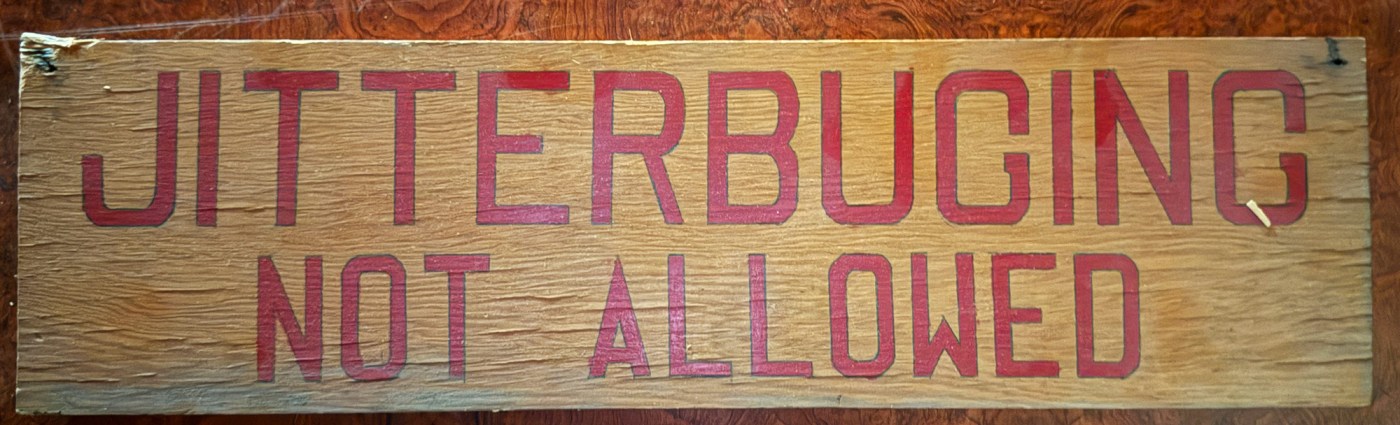
Not all suggestions were met with unanimous enthusiasm, though. At the September meeting, someone proposed banning jitterbug dancing at Grange events. The secretary’s notes don’t specify who made the suggestion. They also don’t explain why it was made. Still, it’s safe to say that jitterbugging’s energetic flips and twirls seemed excessive. They may have been much for the more traditional crowd.
By October, the Grange reached another milestone. A cornerstone was discussed, with plans to include the names of charter members, though its final location remains a mystery. Meanwhile, the hall’s new sign was ready to be painted, signaling its place as a proud landmark in the community.
On October 29, 1941, the Fairfax Grange Hall was officially dedicated in a ceremony led by the State Master. After a short program, 150 members and friends gathered to celebrate with refreshments. The hall had started as a shared dream. Now it stood as a testament to what is accomplished through teamwork and determination.
But as the year turned to 1942, the mood shifted. On January 2, a letter from District Attorney Tom Scott was read. It asked for names of members who might need defense work. This was a sobering reminder of the nation’s entry into World War II just three weeks earlier. The Government Housing Committee also reached out, asking to use the hall in case of an emergency. The Grange, ever willing to serve its community, gave permission without hesitation.
Plans were quickly made to black out the hall, with members deciding to cover the windows with insulation paper. These were uncertain times. The Grange Hall had become a center of joy and celebration. It was also a place of preparation and resilience.
What’s Next? From sold geese to jitterbug bans, the Fairfax Grange had already seen its share of memorable moments. But as the war loomed, the hall’s role in the community would grow in ways no one had predicted. How would the Grange rise to meet the challenges of wartime? Stay tuned—we have got 80 years of history.